
Acne vs Pimples: What’s the Difference and How to Treat Them?
- June 15, 2026
- By Abc Heart And Skin Care
- 186
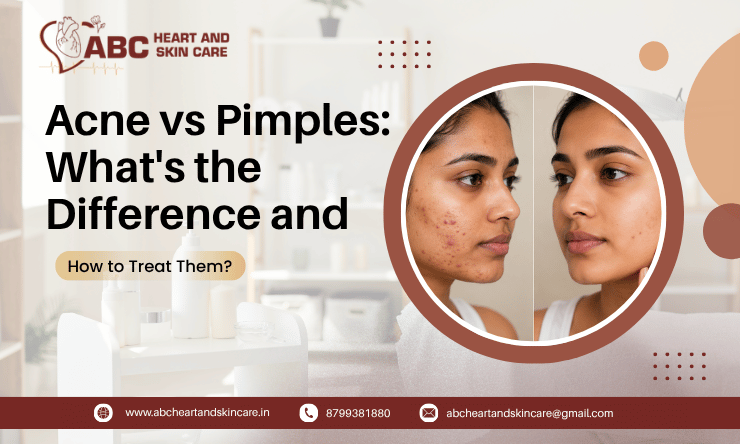
The terms “acne” and “pimples” are often used interchangeably, but it makes complete sense because they seem very alike, appear in identical locations, and create equal irritation. However, acne and pimples are still two different phenomena, which is why you may want to familiarize yourself with this distinction in order to take appropriate measures for avoiding aggravation of the problem.
If you have been suffering from acne since the teenage years or experienced a skin problem only now when grown up, getting familiarized with what it really is will be your first important step. If you find out that you need professional help to get rid of such problems, consult the best dermatologist doctor in Ahmedabad.
Let’s understand acne and pimples in simple terms.
What Are Pimples?
A pimple is simply one single bump on your skin. It occurs when a pore is clogged with oil, dead skin and bacteria and your skin responds to that clog.
Pimples can pop up on your:
- Face
- Neck
- Chest
- Back
- Shoulders
Common types:
- Whiteheads
- Blackheads
- Papules
- Pustules
- Nodules
- Cysts
Think of a pimple as one symptom showing up, not the whole problem itself.
What Is Acne?
Acne is a skin condition. It’s the root cause of those pimples that keep coming back. It occurs when your hair follicles get clogged up with oil and dead skin cells chronically. It can be mild or really stubborn and painful.
Usually, acne consists of:
- Blackheads.
- Whiteheads
- Red, inflamed pimples
- Painful cysts
- Nodules deep
The easiest way to remember: a “pimple” is just one spot. “Acne” means the ongoing condition which causes repeated spots.
One is a moment. The other is a pattern.
Acne vs Pimples: Key Differences
Pimples | Acne | |
What it is | Single bump | Chronic skin condition |
Severity | Usually mild | Mild to severe |
Duration | Temporary | Long-term |
Scarring risk | Low | Higher if untreated |
Treatment needed | Spot treatment | Full medical plan |
What Causes Pimples?
- Too much oil – excess production of oil and blocking of pores
- Bacteria – builds up in blocked pores, causing inflammation and irritation
- Changes in hormones – common during puberty, menstruation, pregnancy, and PCOS
- Bad hygiene – sleeping with makeup on, failing to wash after perspiration
- Unsuitable products – use of pore-blocking ingredients that lead to buildup in pores
- Stress – increases hormones leading to breakouts
- Face touching – transfer of bacteria from hands to the skin frequently
What Causes Acne?
- Hormonal imbalance — increase in androgenic hormones leads to overproduction by oil glands
- Genetics — likelihood increases if either parent had acne when younger
- Sebum overproduction — excess oil in the skin leads to a suitable atmosphere for clogged pores
- Dead cell accumulation — failure of cells to shed leads to blockage in the pores
- Inflammation — immune response by the body causes reddening of the area and deeper infections
- Environmental factors — bad sleeping habits, high stress, smoking, and poor diet affect skin
Symptoms: Pimple
- Small red bump Pigmentation
- Pus-filled head
- Sore or tender spot
- Edema localized
Most pimples resolve on their own within a few days and are fairly manageable with simple skin care.
Symptoms: Acne
- Consistent outbreaks on the face or the body
- Presence of blackheads or whiteheads on the skin
- Red inflamed bumps that keep coming back
- Cysts, which form deep within the skin layer
- Skin with excess oil or congestion
- Dark marks that remain even after the acne has healed
If not properly treated, it may lead to scarring.
The effects of acne can be deeper than just your skin!
How to Treat Pimples
- Cleanse gently: wash your face twice a day with a mild, non-stripping cleanser
- Hands off: touching spreads bacteria and makes inflammation worse
- Spot treat: look for salicylic acid, benzoyl peroxide, or sulfur-based products
- Stay hydrated: good skin genuinely starts from within
- Light makeup only: always non-comedogenic, always removed before bed
- Change pillowcases: fabric holds bacteria and oil overnight without you realising
How to Treat Acne
Acne needs more than a spot cream. It needs a consistent, well-thought-out plan — and often, medical support.
Topical treatments:
- Retinoids — speed up cell turnover and unclog pores
- Benzoyl peroxide — kills acne-causing bacteria
- Antibiotic creams — reduce bacterial growth and inflammation
- Salicylic acid — exfoliates inside the pore and keeps it clear
Oral medications (for moderate to severe acne):
- Antibiotics — reduce bacteria and inflammation from within
- Hormonal therapy — especially effective for women with hormonal acne
- Isotretinoin — for severe cystic acne, strictly under medical supervision
Advanced clinic treatments:
- Chemical peels — remove dead skin, improve texture, reduce acne marks
- Laser therapy — targets active acne and minimises scarring
- Professional extractions — safely clears congested pores without causing damage
- Customised plan — the best dermatologist doctor in Ahmedabad at ABC Heart and Skin Care can assess your specific skin type and build a treatment approach that actually works for you
Can Acne and Pimples Leave Scars?
Yes. Acne that has been inflamed and continually picked at will lead to:
- Dark spots
- Pigmentation
- Ice pick scars
- Boxcar scars
- Rolling scars
The sooner the acne is treated, the less likely it is for scars to develop.
Tips to Prevent Acne and Pimples
- Consistency is important; cleanse, moisturize, and use sunscreen on a daily basis.
- Use non-comedogenic products to keep your skin unclogged.
- Eat healthy foods such as fruits, vegetables, whole grains and protein.
- Also, you can do exercise, meditation, and sleep in order to manage stress.
- Don’t pick at pimples; it may cause infection or scarring.
- Change your pillowcase often.
- Wash off all your makeup before sleeping.
When to See a Dermatologist?
Don’t sit on it too long. Book a consultation if:
- Acne is painful, deep, or cystic
- OTC products haven’t helped after 6–8 weeks
- Breakouts are leaving dark spots or scars
- You’re experiencing sudden adult acne with no obvious cause
- Breakouts keep returning in the same spots
- Your confidence is genuinely being affected
Getting the right diagnosis early prevents a lot of long-term skin damage and saves you from wasting time and money on the wrong products.
Conclusion
Although acne and pimples are often confused, they are not the same. A single bump on the skin is a pimple; however, when there are repetitive breakouts on the skin, it becomes acne. It will become easy to know how to treat and avoid having such skin problems.
Occasional pimples can be managed with proper skin care, but when acne is severe, professional help is usually needed. Choosing the best dermatologist doctor in Ahmedabad can help you get an proper personalized treatment and long-term solutions for clearer and healthier skin.
FAQs
Is all acne considered a pimple?
Not always. A pimple does not equal acne. Acne is repeated or recurrent outbreaks.
Can stress cause acne?
Yes. Stress hormones can contribute to increased severity of acne symptoms.
How many days will it take for a pimple to clear completely?
Most pimples go away after a few days or even less than a week.
Can acne be cured permanently?
Acne is controllable, but some people may have repeat breakouts.
Should I pinch or pop my pimples?
Not really, because it will make the condition worse.

Related Blogs
- July 27, 2026
Best Skin Clinic in Ahmedabad: What.
Choosing the best skin clinic in Ahmedabad is not just a matter of selecting the first one that comes up.
Read More
- September 7, 2026
Maintaining Your Glow: Skincare Routine After.
Professional medi-facial can make your skin look fresh, smooth, and radiant. But that glow doesn't stay on its own; what.
Read More