

How to Manage Monsoon Acne and Fungal Infections in Ahmedabad's Humid Weather
How to Manage Monsoon Acne and Fungal Infections in Ahmedabad’s Humid Weather
- August 17, 2026
- By Abc Heart And Skin Care
- 35
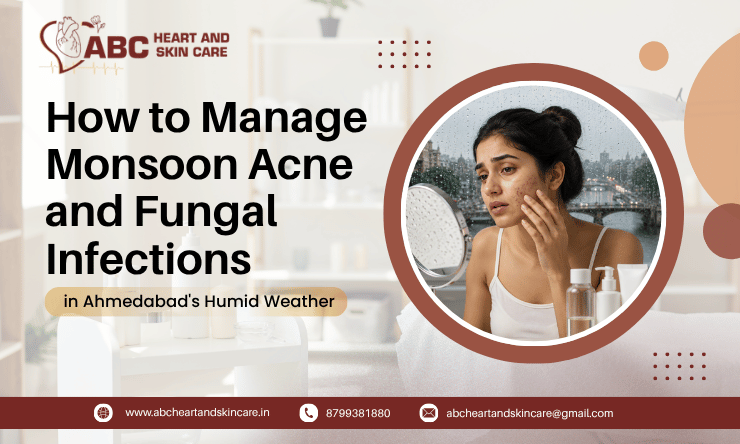
The monsoon season in Ahmedabad does give you some relief from the heat that comes during summers, but due to humidity, sweating, and drastic changes in temperature, it becomes very difficult for your skin to cope with everything.
Breakouts show up out of nowhere. Rashes start itching in places you didn’t expect. If this sounds familiar, you’re not imagining it. And if home remedies aren’t cutting it, visiting the best skin clinic in Ahmedabad can help you figure out what’s actually going on instead of guessing for weeks.
Why Does Monsoon Weather Affect Your Skin?
Short answer: moist air prevents sweat and oil from evaporating as dry heat does. And so it just sits there. Mixed with dust, sunscreen, and pollution, it clogs pores fast.
Damp areas of the body, like underarms, groin, neck folds, and inner thighs, stay moist for longer too. That’s exactly the kind of environment fungus loves.
Common monsoon skin issues in Ahmedabad:
- Sudden pimples and blackheads
- Itchy, red patches
- Fungal infections in skin folds
- Constant sweating
- Inflamed hair follicles
- Skin that feels more sensitive than usual
One thing worth remembering is that acne and fungal infections are not the same problem, and treating one like the other usually makes things worse, not better.
Monsoon Skincare Tips from the Best Skin Clinic in Ahmedabad
You don’t need a ten-step routine. You need consistency and products that actually suit humid weather.
Cleanse, But Don’t Overdo It
Wash your face twice a day with a gentle, non-drying cleanser. If you’ve been out sweating, rinse your face rather than letting it sit for hours.
Washing too often, though, backfires. It strips your skin’s natural oils and can trigger even more breakouts.
Go Lightweight, Always
Heavy creams feel unbearable in monsoon humidity. Switch to gel-based, non-comedogenic moisturisers instead.
Oily skin still needs moisture; skipping it completely just makes your skin produce more oil to compensate.
Sunscreen Isn’t Optional
Cloudy skies don’t block UV rays. Wear a broad-spectrum sunscreen every single day, monsoon included.
If you sweat a lot outdoors, reapply as directed on the label; don’t just apply once in the morning and forget about it.
Keep Sweaty Areas Dry
Change out of wet clothes as soon as you can, especially after workouts or getting caught in the rain. Stick to breathable, cotton fabrics.
Wash towels, gym clothes, and bedsheets more often than you normally would this season.
How to Spot a Fungal Infection Early
Fungal infections often get mistaken for regular irritation or heat rash until they spread.
Watch out for:
- Constant, nagging itching
- Red or darker patches
- Ring-shaped rashes
- Peeling or flaky skin
- Rash that keeps expanding
- Irritation in skin folds specifically
An itchy patch between the thighs after a sweaty day, for example, needs a completely different treatment than a heat rash would.
Big mistake to avoid: reaching for random combination creams, especially ones with steroids. They can calm redness temporarily while letting the actual fungal infection quietly get worse underneath.
If a rash keeps coming back or spreading despite treatment, that’s your cue to see a dermatologist rather than continuing to experiment.
When Should You Actually See a Skin Specialist?
Mild issues often settle down with basic care. But some signs mean it’s time to stop DIY-ing it:
- Acne that’s painful or leaving marks
- Pimples spreading suddenly and widely
- An itchy rash that won’t stop growing
- Fungal infections that keep returning
- Over-the-counter creams doing nothing
- Skin that’s swollen, painful, or oozing
A qualified dermatologist can tell the difference between acne, fungal infections, bacterial issues, and dermatitis conditions that often look nearly identical to the untrained eye.
This is exactly why choosing the best skin clinic in Ahmedabad should come down to proper diagnosis and experienced care, not just which clinic has the flashiest ads.
Common Monsoon Skincare Mistakes People Make
A few habits quietly sabotage good skin during this season:
- Layering too many products at once, irritating the skin further
- Popping pimples, which raises the risk of scarring
- Sharing towels, especially risky with any suspected infection
- Sitting in damp clothes for hours after getting wet
- Self-medicating with steroid creams meant for someone else’s skin
- Delaying professional care while trying product after product
If you’ve been dealing with the same rash for over a week without any real improvement, that’s usually a sign to stop experimenting.
A Simple Monsoon Routine for Ahmedabad Weather
Keep it practical; nothing fancy is needed.
Morning: Gentle cleanser → lightweight moisturiser → sunscreen.
During the day: Control sweat, avoid touching your face, and change out of damp clothes when you can.
Evening: Cleanse → apply any dermatologist-recommended treatment → moisturise.
For fungal-prone areas, staying clean and completely dry matters more than any product you apply.
FAQs
1. Does humidity actually trigger acne?
No, but then excessive sweating, oily skin and blocked pores due to humidity do cause pimples. A dermatologist will be able to determine the exact reason behind your pimples.
2. How should I protect myself from fungal infections during monsoon?
Keep your sweaty areas dry, change from damp clothes quickly, wear comfortable clothing, and don’t share towels. If the itching persists, you need to see a dermatologist, not another lotion.
3. Should oily skin skip moisturiser in monsoon?
No, oily skin can still get dehydrated. Just pick something lightweight and non-comedogenic instead of avoiding moisturiser altogether.
4. When should I visit the best skin clinic in Ahmedabad?
When acne turns painful or starts scarring, or when a rash keeps spreading or returning despite home care. Catching it early prevents months of the wrong treatment.
5. Can the same cream treat both acne and fungal infections?
Usually not. They have completely different causes, and using the wrong product on the wrong condition can make things worse rather than better.
Conclusion
Handling monsoon skin problems really comes down to three things controlling sweat, protecting your skin barrier, and catching symptoms early before they spread. Small, consistent habits go a long way here.
If acne or fungal infections are still bothering you despite trying everything, it’s worth getting a proper evaluation instead of testing more products blindly. For dermatologist-led care you can actually trust, reach out to Abc Heart & Skin Care, recognised as one of the best skin clinic in Ahmedabad for exactly these kinds of monsoon skin concerns.
Don’t let a recurring rash or stubborn breakout drag on all season; get it checked and get back to comfortable skin.

Related Blogs

- July 20, 2026
Why Professional Skin Treatment Gives Better.
Skincare has become a big part of daily life in India. From homemade face packs to viral Instagram hacks, everyone.
Read More
- June 15, 2026
Acne vs Pimples: What’s the Difference.
Understand the key difference between acne and pimples, their causes, symptoms, and effective treatment options. Learn dermatologist-approved skin care tips.
Read More