

Clinical Dermatology: Managing Chronic Skin Conditions Safely
- September 21, 2026
- By Abc Heart And Skin Care
- 36
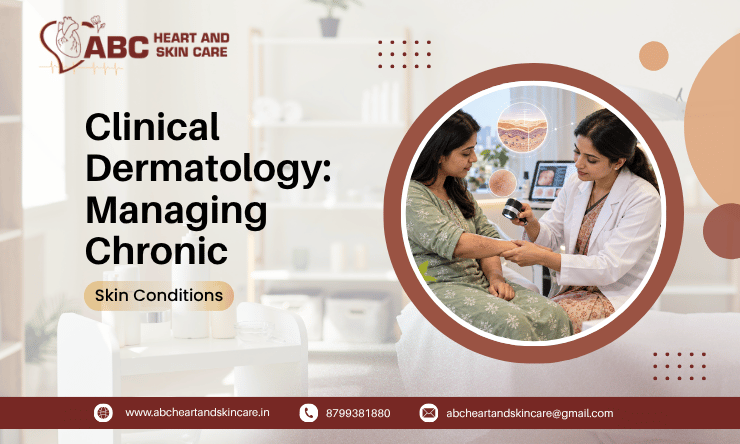
Chronic skin conditions rarely just affect your appearance. Eczema, psoriasis, acne, rosacea, and recurring dermatitis often come with itching, dryness, discomfort, and flare-ups that show up again and again without warning. Working with an experienced dermatologist doctor in Ahmedabad can help you finally understand what’s causing the problem, instead of just treating whatever shows up on the surface.
Clinical dermatology isn’t about quick fixes. It is all about understanding your skin, symptom management, and taking care of your skin for many years to come rather than for the next few weeks only.
What Does Clinical Dermatology Mean?
Simply, clinical dermatology is the study of skin care from a medical point of view. It means that a dermatologist will examine the problem, try to determine its cause, and develop an individual treatment program based on your particular skin.
For chronic conditions, the real goal isn’t just clearing up today’s flare-up. It is reducing the rate of recurrence and preventing the disease from deteriorating. Treatment may vary according to your individual situation and may include:
- Prescription creams
- Tablet medications
- Medicated shampoos
- Lifestyle adjustments
- Light therapy treatments
- Further follow-ups
Take, for example, a patient suffering from eczema. The individual will need help figuring out whether his problem is due to harsh soap, dry skin or environmental factors. Someone with psoriasis, on the other hand, usually needs a completely different approach altogether.
When Should You See a Dermatologist Doctor in Ahmedabad?
Most of us start by picking up a cream from the local pharmacy or trying something we saw online. That’s normal, and basic skincare does help sometimes. However, if the problem does not get resolved no matter what you try, then it means it is time to stop assuming.
If any of the following symptoms occur, it is best to visit a dermatologist doctor in Ahmedabad:
- Symptoms persisting for weeks
- Frequent outbreaks
- Itching or swelling of the skin
- Painful or infected skin
- Changes in moles suddenly
- Acne causing scarring
- Recurring rash
- Problems with skin disturbing sleep
Early testing will help rule out similar diseases requiring totally different treatment underneath.
How Are Chronic Skin Conditions Diagnosed?
The correct diagnosis is literally half the problem solved. While examining you, the dermatologist will most likely ask you the time of onset of the symptoms, what treatment you have undergone so far, and any skin diseases that exist within your family history.
The dermatologist will perform an in-depth examination of your skin and may suggest additional tests if necessary.
Medical History
Little things such as allergies, medications, and previously experienced skin problems are very valuable information for the dermatologist to get an accurate picture.
Physical Examination
A Physical Examination
Where the rash is, what it looks like, and how it’s spread all help narrow down the possible cause.
Additional Testing
For some cases, a skin biopsy or allergy test might be suggested to get a clearer picture before starting treatment.
One thing worth remembering: don’t try to diagnose yourself from Instagram reels or WhatsApp forwards. A lot of skin conditions look nearly identical but need very different care.
Safe Ways to Manage Chronic Skin Problems
Managing a long-term skin condition is less about finding a miracle product and more about staying consistent with what actually works.
Stick to the Prescribed Plan
Use your medicines exactly the way your dermatologist told you to. Applying extra cream doesn’t speed things up; it usually just irritates your skin further.
Keep Your Routine Simple
Stick to gentle, fragrance-free products. Avoid layering too many active ingredients at once, especially if your skin is already reacting.
Protect Your Skin Barrier
Moisturising regularly matters, especially if dryness is part of your condition. Lukewarm water instead of hot showers also makes a noticeable difference over time.
Track Your Triggers
Heat, sweat, stress, certain fabrics, or even a new detergent can quietly worsen your symptoms. Keeping a simple note of what flares up your skin can be surprisingly helpful.
If you live in Ahmedabad, you’ve probably noticed your skin acts up more during the hot, humid months. Adjusting your skincare with the seasons helps, but if symptoms stick around, it’s still worth getting it looked at professionally.
Common Mistakes to Avoid
A few everyday habits can quietly make chronic skin conditions much harder to control.
Switching products too often: Give a treatment time to actually work before deciding it’s “not working”.
Using steroid creams casually: These are effective medicines, but the strength and duration matter. Using them without guidance can cause real problems later.
Over-exfoliating: Abrasive scrubs and acid treatments can lead to even more irritation on sensitive skin.
Repeating the same mistake: When something keeps happening again, it is a sign that something needs to be changed.
Trusting random online remedies: What works for someone on social media may not suit your skin type at all.
Practical Tips for Healthier Skin
Alongside your treatment, a few small daily habits genuinely help:
- Wear daily sunscreen
- Moisturise consistently
- Avoid picking or scratching
- Check product ingredients
- Note recurring symptoms
- Attend every follow-up
- Share all products used
And above everything else, never stop a prescribed treatment suddenly without talking to your dermatologist first.
FAQs About Clinical Dermatology
1. Why do I need to consult a dermatologist for my recurring skin condition?
The dermatologist will be able to diagnose your symptoms, figure out the cause behind them, and provide suitable treatment based on your condition.
2. Are all chronic skin diseases completely curable?
It all depends on the specific disease. Some of them go away with proper treatment, whereas some other ones can only be controlled.
3. Are OTC creams safe for any chronic skin condition?
Not necessarily. Such creams can cover up the condition rather than solving the problem. In the case where you have a chronic skin problem that continues to recur, it would be best to consult a doctor.
4. What is the duration of the dermatology treatment?
This may vary greatly, based on the severity of the case. Some cases can resolve within a couple of weeks, while some are chronic.
5. When do I need to get immediate medical care for my skin condition?
In case you experience rapidly spreading redness, swelling, discharge, fever, or difficulty breathing together with your skin condition, then you should see a doctor immediately.
Conclusion
Safe management of a chronic skin problem is not all about trying out different products for immediate results. Instead, it’s about getting a correct diagnosis and being consistent in managing the skin condition through use of minimal treatments.
Are you one of those people who have skin conditions that will never calm down? Visit a dermatologist doctor in Ahmedabad at ABC Heart & Skin Care for professional skin evaluation and begin your treatment routine.

Related Blogs

- July 13, 2026
Dermatologist vs Cosmetologist: Whom Should You.
Skin issues can pop up at any age, and most of us have stood in front of the mirror unsure.
Read More
- July 20, 2026
Why Professional Skin Treatment Gives Better.
Skincare has become a big part of daily life in India. From homemade face packs to viral Instagram hacks, everyone.
Read More