

Effective Hair Loss Treatments: PRP Therapy and Beyond
- August 10, 2026
- By Abc Heart And Skin Care
- 42
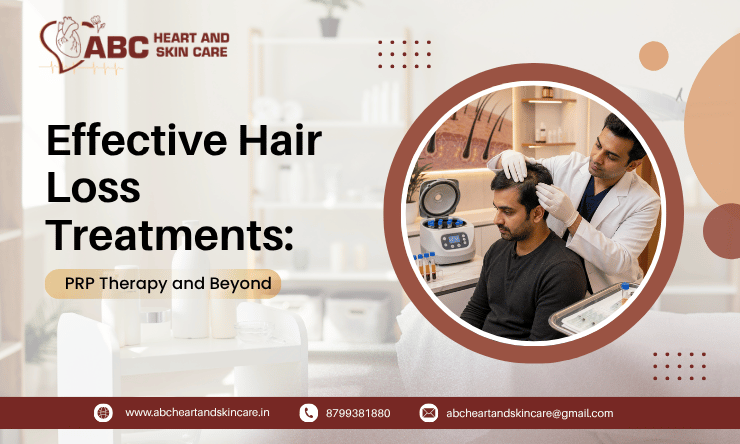
Sometimes hair fall irritates people when it affects their look or self-confidence. Now, the good news is that modern dermatologists have a number of treatments for hair loss. Some of them are medications, PRP treatment and hair transplantation.
If you’re searching for the best doctor for hair in Ahmedabad, don’t start by picking a treatment. Start by finding out why you’re losing hair in the first place. The cause decides the cure, and skipping that step often means wasted money and disappointment.
Why Does Hair Loss Happen?
Shedding 50 to 100 strands a day is completely normal. It’s worth worrying about when you notice heavy shedding, a widening middle part, a receding hairline, thinning near the crown, or patches of visible scalp.
Common triggers include:
- Genetics — pattern baldness
- Hormonal shifts — pregnancy, PCOS, menopause
- Stress or illness — sudden shedding
- Nutritional gaps — iron, protein deficiency
- Thyroid issues — under or overactive
- Scalp problems — infection, inflammation
- Alopecia areata — patchy autoimmune loss
- Styling damage — tight buns, chemical treatments
Someone who starts shedding heavily after a bout of dengue needs a completely different plan than someone dealing with slow, hereditary thinning over the years. That’s exactly why a scalp examination should always come before a prescription.
PRP Therapy for Hair Loss: How Does It Work?
Platelet-Rich Plasma, better known as PRP, is one of the more popular non-surgical routes for certain kinds of hair thinning.
A small vial of your own blood is drawn and spun in a centrifuge to separate out the platelet-rich layer. That concentrated plasma is then injected back into the thinning areas of your scalp. Platelets are loaded with growth factors that can wake up follicles that have gone weak or sluggish.
PRP tends to work best when follicles are still alive but underperforming. It won’t help in patches where follicles have shut down completely — there’s simply nothing left to stimulate.
What Can You Expect From PRP?
PRP isn’t a one-session miracle. The hair growth happens in cycles; therefore, the effects take time to show and not instantly.
For many, the first thing they realize is the absence of hair fall, followed by thicker hair after a couple of months. The effectiveness will depend on the extent of the problem and cause, your overall health condition, and adherence to the treatment.
Mild redness, tenderness, and swelling right after the injections can be experienced. A good dermatologist will walk you through realistic expectations, limitations, and possible side effects before you begin.
Beyond PRP: Other Hair Loss Treatments
PRP is just one tool in the kit. Depending on what’s actually causing your hair loss, your dermatologist may suggest something else entirely.
Minoxidil
Topical minoxidil remains one of the most widely used treatments for hereditary hair loss in both men and women. It helps slow further loss and can support thicker regrowth in existing hair. The catch is that it needs to be used consistently. Stop applying it, and the benefits fade too.
Don’t switch to minoxidil just because it worked for a friend or a relative. What suits their scalp and cause may not suit yours.
Prescription Medicines
For pattern hair loss, doctors sometimes prescribe oral medicines like finasteride or other anti-androgen options. These aren’t one-size-fits-all and come with restrictions that matter.
Finasteride, for instance, needs extra caution around anyone who could become pregnant. This is precisely why prescription treatments should never be self-started; they need a doctor’s judgment behind them.
Microneedling and Light-Based Treatments
Microneedling and certain laser or light-based therapies are sometimes added to a treatment plan. Their effectiveness really depends on the type of hair loss involved, so they shouldn’t be treated as a blanket fix for everyone walking through the clinic door.
Hair Transplantation
When hair loss has progressed and there’s enough healthy donor hair available, a hair transplant becomes a realistic option. Follicles are lifted from denser areas like the back or sides of the scalp and relocated to thinning or bald patches.
Unlike PRP treatment, a hair transplant procedure involves the physical movement of live hair follicles rather than the restoration of already existing but weakened hair follicles.
How to Choose the Best Doctor for Hair in Ahmedabad
Choosing the best doctor for hair in Ahmedabad should not be an issue of simply comparing the cost of packages.
Choose one who:
- Does diagnosis first
- Inspects the scalp correctly
- Tells you all about your options
- Succumbs to reality
- Gives you proper follow-up
- Does not give you any “guarantee of regrowth”
- Follows safe protocol
A consultation that goes like a normal discussion is an indicator that you have chosen the right person.
Practical Tips to Support Hair Health
Treatment works better alongside sensible everyday habits.
- Eat a protein-rich, balanced diet
- Skip crash diets
- Handle wet hair gently
- Avoid constant tight hairstyles
- Treat dandruff or scalp irritation early
- Stick to your prescribed routine
- Track progress with photos, not memory
One more thing: don’t load up on high-dose biotin, iron, or random supplements without medical reason. Too much of certain nutrients can actually work against you and contribute to hair fall rather than fix it.
Common Hair Loss Treatment Mistakes
Plenty of people delay proper treatment simply because they keep experimenting on their own first.
- Waiting too long to see a doctor
- Expecting instant PRP results
- Following random trends online
- Buying supplements without reason
- Quitting treatment early
- Choosing by price alone
Diagnosis, expertise, and consistent follow-up matter far more than a discounted package deal.
FAQs
1. How can one treat hair loss effectively?
There is no magical way that works for everybody, but there can be many different alternatives like PRP, medicines, microneedling, and hair transplants depending upon the cause of hair fall.
2. Can PRP therapy be good for hair loss?
Yes, it certainly can be helpful in case of certain patients with moderate hair loss, where the hair follicles remain functional.
3. How many PRP sessions are required?
It is different for everyone, but basically, it will include several initial sessions followed by maintenance treatments regularly. This will depend on how your dermatologist will evaluate your scalp problem.
4. How can I choose the right doctor for hair in Ahmedabad?
Find an experienced dermatologist who is capable of diagnosing various kinds of hair fall. Discuss his methods of diagnosing, treatment, timing, etc., in the consultation itself.
5. Will totally bald patches grow hair through PRP?
No, PRP is effective in treating weak follicles that still work. In cases where the follicles are totally lost, hair transplant treatments could be more appropriate.
Conclusion
For a real solution to hair loss, you have to know what is causing it, not just follow the latest fad. PRP treatment can actually benefit certain people, but drugs, changes in lifestyle, or transplantation might suit your condition better.
If you want the best hair doctor in Ahmedabad, the first step is to get a thorough examination of your scalp. At ABC Heart & Skin Care, you can sit down with a specialist and build a treatment plan around your actual hair loss pattern and goals.

Related Blogs
- August 24, 2026
Combating Monsoon Hair Fall: Advanced Hair.
The monsoon season provides much-needed relief from summer heat in Ahmedabad; however, it could also pose another problem for people.
Read More
- June 5, 2026
Top 10 Causes of Hair Fall.
Discover the top 10 causes of hair fall in men and women, from genetics and stress to nutritional deficiencies. Learn.
Read More