

Chemical Peel Recovery Guide: Troubleshooting Redness and Flaking
Chemical Peel Recovery Guide: Troubleshooting Redness and Flaking
- November 9, 2026
- By Abc Heart And Skin Care
- 12
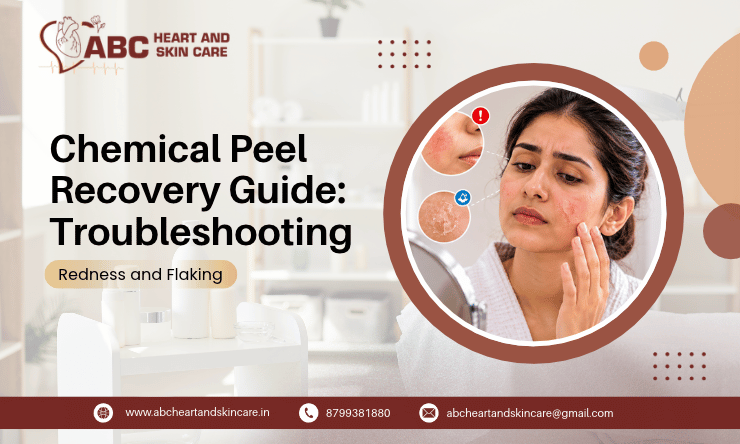
The process of chemical peels helps in achieving a uniform tone of the skin and getting rid of any scars from acne, fine lines, and even dullness. This is followed by the skin turning red, feeling tight, or developing flaking. It is vital to understand these aspects of the skin.
When looking for treatment in the best skin clinic in Ahmedabad, understanding the healing process will come in handy. This is because every skin type responds differently to a particular treatment, depending on the type and the intensity of the peel used.
This guide will explain what one should expect following a chemical peel, how to handle redness and peeling, and when to contact a professional.
What Happens to Your Skin After a Chemical Peel?
A chemical peel uses a carefully chosen solution to loosen and remove damaged outer skin cells. Stronger peels can reach deeper layers too.
After a chemical peel, your skin will begin to repair itself. New cells take place of the old ones, and their texture improves.
What will happen to you?
- Redness: pink and warm skin
- Dryness: tight and dry skin
- Flakiness: flaky dead skin cells
- Sensitivity: sensitive to sun
All of these symptoms are temporary and depend on the depth of the chemical peel you had.
How Long Does Chemical Peel Recovery Take?
Every face heals at its own pace. The depth of the peel makes the biggest difference.
Type of peel | Typical recovery | Common reactions |
Superficial | 1–7 days | Mild redness, dryness |
Medium | 7–14 days | Clear redness, peeling |
Deep | 2–3 weeks or more | Swelling, crusting, long redness |
Treat these as rough guides, not promises. Your dermatologist may suggest a different plan based on your skin.
For example, a light glycollic peel may leave you with faint flaking for a few days. A medium-depth TCA peel usually needs more rest and closer check-ins with your doctor.
How to Manage Redness After a Chemical Peel
Redness is the number one worry after a peel. Your skin barrier is weaker for a while, so heat, sunlight and strong products sting more than usual.
These simple steps can help.
1. Use a Gentle Moisturiser
Select a fragrance-free moisturizer that can help restore the skin barrier. Look for:
- Ceramides
- Glycerin
- Hyaluronic acid
Dab it on softly. Do not rub. Your doctor may also suggest a specific healing cream, so follow that first.
2. Apply a Cool Compress
If your face feels hot, press a clean, damp, cool cloth on it for a few minutes. It brings quick relief.
Skip the ice. Direct ice can irritate already sensitive skin.
3. Stay Away From Direct Sunlight
Freshly treated skin burns easily. Sun exposure may lead to post-inflammatory hyperpigmentation. It causes darker spots due to skin irritation. Indian skin tones are more prone to it.
Restart sunscreen only when your dermatologist says so. After that, use a broad-spectrum SPF 30 or higher and reapply as advised. During Ahmedabad’s hot months, a hat and some shade go a long way.
4. Avoid Heat and Excessive Sweating
For the first few days, stay away from:
- Steam rooms and saunas
- Hot showers on the face
- Heavy workouts
- Long sun exposure
Ask your clinic exactly when you can go back to these.
What Should You Do About Skin Flaking?
Flaking is a normal part of healing. Old cells shed, and new skin forms underneath. It may look untidy, but never try to speed it up.
Here is a simple routine:
- Moisturise: several times daily
- Cleanse gently: lukewarm water
- Let it shed: no pulling
- Skip exfoliation: no scrubs, brushes
- Protect skin: follow aftercare
Say small flakes show up around your nose or chin. Do not scrub them off. Apply a gentle moisturiser and let them fall away on their own.
Which Skincare Ingredients Should You Avoid?
Products you loved last week can irritate your skin this week. Your routine needs a short break from certain active ingredients.
Ingredient or product | Why avoid it |
Retinol and retinoids | Increase dryness, irritation |
Glycolic acid | Causes extra exfoliation |
Salicylic acid | Irritates healing skin |
Benzoyl peroxide | Adds dryness, sensitivity |
Physical scrubs | Damage healing surface |
Strong vitamin C | May cause stinging |
Do not restart them just because the redness has faded. Wait until your skin has healed and your dermatologist gives the go-ahead.
Until then, keep it basic: a gentle cleanser, an approved moisturiser and sunscreen. That is enough.
Common Chemical Peel Recovery Mistakes to Avoid
Small slip-ups can slow healing or cause complications. Watch out for these.
1. Peeling the skin manually
It is tempting, especially when a flap hangs loose. But pulling can cause wounds, scars and dark marks. Let it shed naturally.
2. Using too many products
Layering serums, acids and actives only irritates healing skin. Keep your routine short and simple.
3. Ignoring sunscreen
Even a short walk in strong sun can raise your pigmentation risk. Protection matters every single day.
4. Washing with hot water
Hot water adds dryness and discomfort. Stick to lukewarm.
5. Expecting instant results
A peel does not work overnight. Skin regeneration is a slow process, and the glow appears as healing occurs.
When Should You Contact Your Dermatologist?
Mild redness, dryness and flaking are common. Some signs, however, should never be ignored.
Call your doctor if you notice:
- Worsening redness
- Severe burning or pain
- Heavy swelling
- Blisters or open sores
- Pus or discharge
- Fever
Do not try home remedies or random medicated creams on these symptoms. Get proper advice first.
If you have trouble breathing, or your lips, tongue or throat swell, seek emergency medical help immediately.
FAQs
1. How long is redness going to last after a chemical peel?
The redness will probably clear up in one to three days after a superficial peel, but the medium and deep peels may cause prolonged redness.
2. Can I wash my face after a chemical peel?
Yes, but wait for your dermatologist’s instructions on timing. Use a mild cleanser and lukewarm water. Pat dry and avoid rubbing.
3. Do I have to remove the peeling skin after a chemical peel?
No. This could result in damaging the newly developed skin, increase the chances of infection and pigmentation.
4. Can I use makeup after a chemical peel?
No, not till your skin heals and you get an approval from your dermatologist. It may cause irritation and hinder the healing process.
5. How do I choose the best skin clinic in Ahmedabad for a chemical peel?
Select a skin clinic where there are dermatologists as well as skin analysis done. The clinic should provide appropriate treatments along with aftercare procedures. A good doctor will explain side effects, expected recovery time and how the peel suits your skin type.
Conclusion
Chemical peel recovery needs patience and a gentle hand. Redness, dryness and flaking are common, and they usually pass with mild cleansing, regular moisturising and sun protection.
Remember that no two skins heal the same way. The right treatment, followed by proper aftercare, lowers the chance of problems and supports healthier-looking skin.
Planning a peel, or worried about a reaction after one? Speak to the dermatology team at ABC Heart & Skin Care.

Related Blogs
- October 12, 2026
The Ultimate Guide to Permanent Laser.
If you have spent years waxing, threading or shaving, you know how tiring it gets. The pain, the monthly parlour.
Read More
- September 21, 2026
Clinical Dermatology: Managing Chronic Skin Conditions.
Chronic skin conditions rarely just affect your appearance. Eczema, psoriasis, acne, rosacea, and recurring dermatitis often come with itching, dryness,.
Read More